• Instagram
  • TikTok
  • LinkedIn
  • JGA US
JGA Recruitment
  • Home
  • Services
    • Payroll Services
      • JGA Payroll
      • Temporary Payroll Recruitment
      • Payroll & HR Salary Calculator
    • HR Services
      • JGA HR
      • Temporary HR Recruitment
      • Payroll & HR Salary Calculator
  • Candidates
    • Search Jobs
    • Send Us Your CV
    • Payroll & HR Salary Calculator
  • Employers
    • Submit a Vacancy
    • Recruitment Solutions
    • Consulting, Coaching & Mentoring
  • Partners
    • Coaching Focus
    • Meta Team
    • Transition Coaching
    • Inference Group
    • WH People
  • Resources
    • News
      • News and Views
      • Payroll Newsletter Signup
      • HR Newsletter Signup
      • Events
    • Podcasts
      • The Payroll Podcast
      • The HR L&D Podcast
      • The Mindful Paths Podcast
    • Job Descriptions
      • Payroll Templates
      • HR Templates
  • About
    • About JGA
    • Meet The Team
    • B Corp
    • Testimonials
    • Policies & Forms
    • Payroll Powers the World! (Song)
    • The Payroll Song
  • Contact
  • Menu Menu

Closing the Gap: Steps We Can All Take for Equal Pay

April 12, 2024/in Blog, HR NEWS, Payroll News/by Aaron Herkanaidu

In the UK, women typically work an extra 52 days (almost two months) to earn what men do on average. This disparity is unacceptable, and achieving equal pay for equal work demands action from all of us.

JGA Recruitment Group is firmly committed to promoting fair compensation practices and fostering a diverse and inclusive work environment. While we actively work towards these goals within our own recruitment services, the responsibility for achieving equal pay extends far beyond any one organisation. Here’s a look at steps we can all take to bridge the gender pay gap:


  1. Challenge Unconscious Bias:

Unconscious bias can creep into the hiring process, leading to the undervaluing candidates. Here’s how to mitigate this:

  • Utilise anonymous resumes: By removing names and other identifying information, hiring managers can focus solely on qualifications and experience.
  • Standardise interview questions: Develop a set of pre-determined questions for all candidates in a specific role. This ensures a fair and objective evaluation process.
  • Train hiring managers on unconscious bias: Educate those involved in the hiring process on recognising and mitigating unconscious bias.


  1. Promote Salary Transparency

Open communication about salary expectations is crucial for achieving fair pay. Here are some ways to encourage transparency:

  • Research salary benchmarks: Conduct research to understand the average salary range for a specific role and location. This information can be a valuable starting point for salary discussions.
  • Disclose salary ranges in job postings: Providing salary ranges upfront allows candidates to make informed decisions about applying for a position.
  • Normalise salary discussions during interviews: Encourage open dialogue about salary expectations during the interview process.


  1. Advocate for Fair Compensation

Negotiating for fair pay is a vital skill. Here’s how to advocate for yourself and others:

  • Be prepared with data: Research salary benchmarks for your position and experience level. This data will strengthen your case when negotiating salary.
  • Practice your negotiation skills: Role-playing salary negotiations can help build confidence and ensure you present your worth effectively.
  • Speak up for colleagues: If you witness a gender-based pay disparity, use your voice to advocate for fair compensation for your colleagues.


  1. Support Upskilling Initiatives

Equipping employees with the skills and qualifications needed for advancement is crucial for closing the pay gap.

  • Support training programs: Encourage and support opportunities for employees to develop new skills and qualifications, making them strong contenders for higher-paying positions.
  • Promote mentorship programs: Mentorship programs can provide employees with guidance and support as they navigate their careers.
  • Advocate for flexible work arrangements: Flexible work arrangements can help employees better balance work and family responsibilities, allowing them to pursue career advancement without sacrificing personal needs.


Closing the Gap: A Collective Effort

Equal pay is not just a goal, it’s a necessity. By taking these steps and fostering a culture of transparency and accountability, we can all play a role in closing the gender pay gap. JGA Recruitment Group is committed to working with businesses that prioritise diversity and equal opportunities. Let’s work together to create a workplace where everyone is valued and rewarded fairly!


Looking for the next step in your career? Or looking for the best Payroll & HR talent to join your organisation? Contact our team on:

  • Telephone: 01727800377
  • Email: [email protected]
  • Website: https://jgarecruitment.com

https://jgarecruitment.com/wp-content/uploads/2024/04/JGA-Article-Closing-the-Gap-Steps-We-Can-All-Take-for-Equal-Pay-Blank.png 1125 1500 Aaron Herkanaidu https://jgarecruitment.com/wp-content/uploads/2024/05/jga-logo-2024.png Aaron Herkanaidu2024-04-12 12:02:172024-04-12 13:42:08Closing the Gap: Steps We Can All Take for Equal Pay

JGA recognised as one of the Best Workplaces in the UK by Great Place to Work for two years in a row!

March 18, 2024/in Blog, HR NEWS, News, Payroll News/by Aaron Herkanaidu

JGA Recruitment Group is recognised as one of the Best Workplaces in the UK by Great Place to Work for two years in a row! ✨

We are delighted to announce that JGA Recruitment Group has been recognised as one of the Best Workplaces in the UK 2024 by Great Place to Work®! This is a huge achievement for our team and we are incredibly proud of what we have achieved together. 🍾

Great Place to Work® is the global authority on workplace culture. They conduct research to identify the best workplaces in the world and help organisations create great places to work for all.


Our Founder and CEO Nick Day, prides himself on making JGA a great place to work for everyone and is delighted that it has been made official two years running. Speaking about the certification, Nick said:

“At JGA Recruitment Group, we’re honoured to be recognised as one of the UK’s Best Workplaces by Great Place to Work. A positive workplace culture fostering inclusion, wellbeing, and growth is critical to creating a sustainable and successful business. That’s why we’re deeply committed to investing in our employees’ mental and physical health and providing a nurturing and supportive environment for everyone in our business.

We are thrilled to see our initiatives’ impact on our workplace culture and are dedicated to continuing to improve and evolve. This recognition is a testament to our team’s hard work and dedication, and we’re proud to be included on this prestigious list. We’ll continue to prioritise the wellbeing of our employees because we know that when our team members thrive, our business thrives.”


We are excited to build on our success and continue to improve our workplace for our team in the years to come! 🎉


About Great Place To Work UK

Great Place to Work is the global authority on workplace culture. Since 1992, they have surveyed more than 100 million employees worldwide and used those deep insights to define what makes a great workplace: trust. In 2022, they launched the first-ever annual UK’s Best Workplaces™ for Wellbeing list of organisations that delivered exceptional wellbeing support for employees across all levels and departments. For more information, visit www.greatplacetowork.co.uk


Contact JGA Recruitment Group

Contact JGA Recruitment to find out more and discover how in partnership, we can locate the top talent for your business and take positive steps to create a sustainable, brighter future for all: [email protected].

JGA Recruitment also publishes two leading business podcasts: The Payroll Podcast and The HR L&D Podcast.

https://jgarecruitment.com/wp-content/uploads/2024/03/Best-Workplaces-2024-Great-Place-to-Work-GPTW-v2.png 680 1202 Aaron Herkanaidu https://jgarecruitment.com/wp-content/uploads/2024/05/jga-logo-2024.png Aaron Herkanaidu2024-03-18 10:39:542024-03-18 12:52:14JGA recognised as one of the Best Workplaces in the UK by Great Place to Work for two years in a row!

The importance of Stories to the History of Working Women

March 15, 2024/in Blog, HR NEWS, News, Payroll News/by Aaron Herkanaidu

History often celebrates grand gestures and prominent figures in the fight for women’s rights. We remember the landmark legislation and the iconic names, but these milestones can obscure a crucial element: the lived experience of the average working woman.

This article by Zoe Lewis, Senior Associate here at JGA Recruitment Group and a history graduate with a passion for equality, dives into the gap between the rhetoric of progress and the everyday struggles of women in the workforce. Zoe uses “unusual examples” to shed light on the disparity between legal rights and practical realities.

Through these untold stories, Zoe argues that achieving true equality requires more than just inclusion on paper. It demands a workplace environment where women feel they genuinely belong.


Momentum in Women’s history is often marked by legal recognition or prominent historical figures. The Equality Act of 1970 or The Sex Disqualification (Removal) Act of 1919 were huge steps towards achieving a more equal legal canvas for men and women. Names such as Emeline Pankhurst, Virginia Woolf, Maya Angelou, and Madonna are admirable examples for their representation of women across political, cultural, and social landscapes.

These were critical catalysts for change, however what is less often recognised is what this looked like for a working woman. For the women who heard of these fantastic examples of strides toward equality but struggled to see it in practice in their workplace. The individual stories of working women across history are crucial to understanding why there exists a disparity between what the movement has achieved and why the conversation needs to continue.

There are multiple examples across history that highlight the difference between Inclusion and reality. I will visit the impact of WW1 and WW2, advancements in the professional fields of law and medicine and the reality of the Equal Pay Act of 1970. I will present this using some more unusual examples you may not have heard before.


The First Major Shift: War

More than a million women joined the workforce in the UK between 1914 to 1918. The main reason for such an influx was to support the gap left by a generation of working men who had joined military efforts. Women took on positions in agriculture, medicine, and manufacturing. To encourage women’s participation in the workforce, rhetoric focused on ‘community,’ ‘heroism’ and ‘victory.’ This was the first-time women were empowered by their working roles and were directly contributing to a broader purpose than their immediate families and communities. However, whilst by 1951 the number of working women had almost returned to pre-war levels, trade unions still defended higher wages for men, despite an increase in women’s union membership.

The ‘Hello Girls’ were women who were bilingual in French and English and served as telephone switchboard operators on the Western front. They underwent physical training, observed strict military protocol, and worked very closely to the front lines. They were admired for their focus ad bravery under pressure and were, in many respects crucial to the day-to-day operations of the frontline. However, the ‘Hello Girls’ did not receive Veteran status or benefits that were afforded their male counterparts. They didn’t receive recognition until 1977.


Professional advancement

Constance Markievicz, an Irish politician, was the first female to be elected as an MP in 1918.  She rejected this in an act of protest and refused to acknowledge the authority of the British government. She became the second female cabinet Minister in Europe when she was elected Minister for Labour in the First Dail. She had been actively involved in nationalist politics in Ireland in 1908 and was a major supporter of the suffragette movement. Her role in the Manchester by-elections in 1908 was a key reason Churchill lost the election to a Conservative candidate. This was not without resistance.

Dr Ivy Williams was the first woman to be called to the Bar in England in 1922 and the first woman to receive a degree as a Doctor of Civil Law from Oxford in 1923. This was due to the Sex Disqualification Act in 1919 which removed the discriminatory policies that disqualified women from certain positions. However, Ivy Williams and her peers struggled to be accepted and survive as barristers. Williams spent most of her career as a Tutor in Jurisprudence.


Equal Pay Act?

A ford factory in Dagenham in 1968 was the theatre of a catalyst for the Equal Pay Act of 1970. 187 female workers at this factory protested their male colleagues earning 15% more than them. Median pay for all employees was 14.3% less for women than for men in April 2023.


What is clear across all such examples is a difference between the illusion of Inclusion, and the reality of the working world for women. McKinsey’s ‘Women in the Workplace’ report over the past 9 years focuses on Myth versus Reality, across perceptions of the ‘glass ceiling,’ ‘Microaggressions,’ and flexible working. Since 2015, the number of women in the C-suite has increased from 17 to 28%, but stories around Belonging for women who are not in companies with women in C-suite positions demonstrates how far parity is out of reach.


About the Author

Zoe Lewis is a Senior Associate here at JGA Recruitment Group and a History graduate with a deep commitment to gender equality.

https://jgarecruitment.com/wp-content/uploads/2024/12/Blog-Post-Have-You-Reviewed-Your-Employee-Value-Proposition-Recently.png 650 975 Aaron Herkanaidu https://jgarecruitment.com/wp-content/uploads/2024/05/jga-logo-2024.png Aaron Herkanaidu2024-03-15 11:31:012024-12-12 13:39:46The importance of Stories to the History of Working Women

5 Top Tips to Cultivate a Happy and Engaged Workforce

March 14, 2024/in Blog, HR NEWS, News, Payroll News/by Aaron Herkanaidu

Employee happiness isn’t just a feel-good notion; it’s a strategic advantage. Studies consistently show that happy employees are more productive, creative, and loyal to their companies. But how do you create a work environment that fosters this kind of positive employee experience?

At JGA Recruitment Group, we understand the importance of building a happy and engaged workforce. Here, we share five key tips to get you started:

1. Recognition and Appreciation

Everyone wants to feel valued. A simple “thank you” or a public shout-out for a job well done can make a big difference. Make recognition a regular part of your company culture, and watch your team morale soar.

2. Invest in Growth

Employees who feel there’s a path for them to learn and develop are more likely to be engaged and stay with your company. Provide opportunities for training, mentorship, or even conference attendance. Investing in your employees’ growth shows you value them as individuals and their long-term contribution to the company.

3. Embrace Flexibility

In today’s world, a healthy work-life balance is essential. Consider offering flexible work arrangements, remote work options, or compressed workweeks. This allows employees to manage their personal commitments without sacrificing their work contributions.

4. Foster Open Communication

Transparency and open communication are key to building trust. Keep your team informed about company developments, and encourage honest feedback. Regular team meetings, anonymous surveys, and open-door policies can help create a space where employees feel comfortable sharing their thoughts and concerns.

5. Celebrate Wins (Big and Small!)

Don’t wait for a major milestone to celebrate your team’s achievements. Acknowledge and celebrate successes big and small. Organise social events, team outings, or even casual dress days to boost team spirit and morale.

Building a happy and thriving workforce is an ongoing process, but the rewards are significant. By implementing these tips, you can create a work environment where employees feel valued, motivated, and empowered to do their best work.

Contact JGA Recruitment Group

Contact JGA Recruitment to find out more and discover how in partnership, we can locate the top talent for your business and take positive steps to create a sustainable, brighter future for all: [email protected].

JGA Recruitment also publishes two leading business podcasts: The Payroll Podcast and The HR L&D Podcast.

https://jgarecruitment.com/wp-content/uploads/2024/03/JGA-Article-5-Top-Tips-to-Cultivate-a-Happy-and-Engaged-Workforce-Blank-2.png 1125 1500 Aaron Herkanaidu https://jgarecruitment.com/wp-content/uploads/2024/05/jga-logo-2024.png Aaron Herkanaidu2024-03-14 10:01:592024-03-14 10:05:595 Top Tips to Cultivate a Happy and Engaged Workforce

Our Impact

March 13, 2024/in Blog, HR NEWS, News, Payroll News/by Aaron Herkanaidu

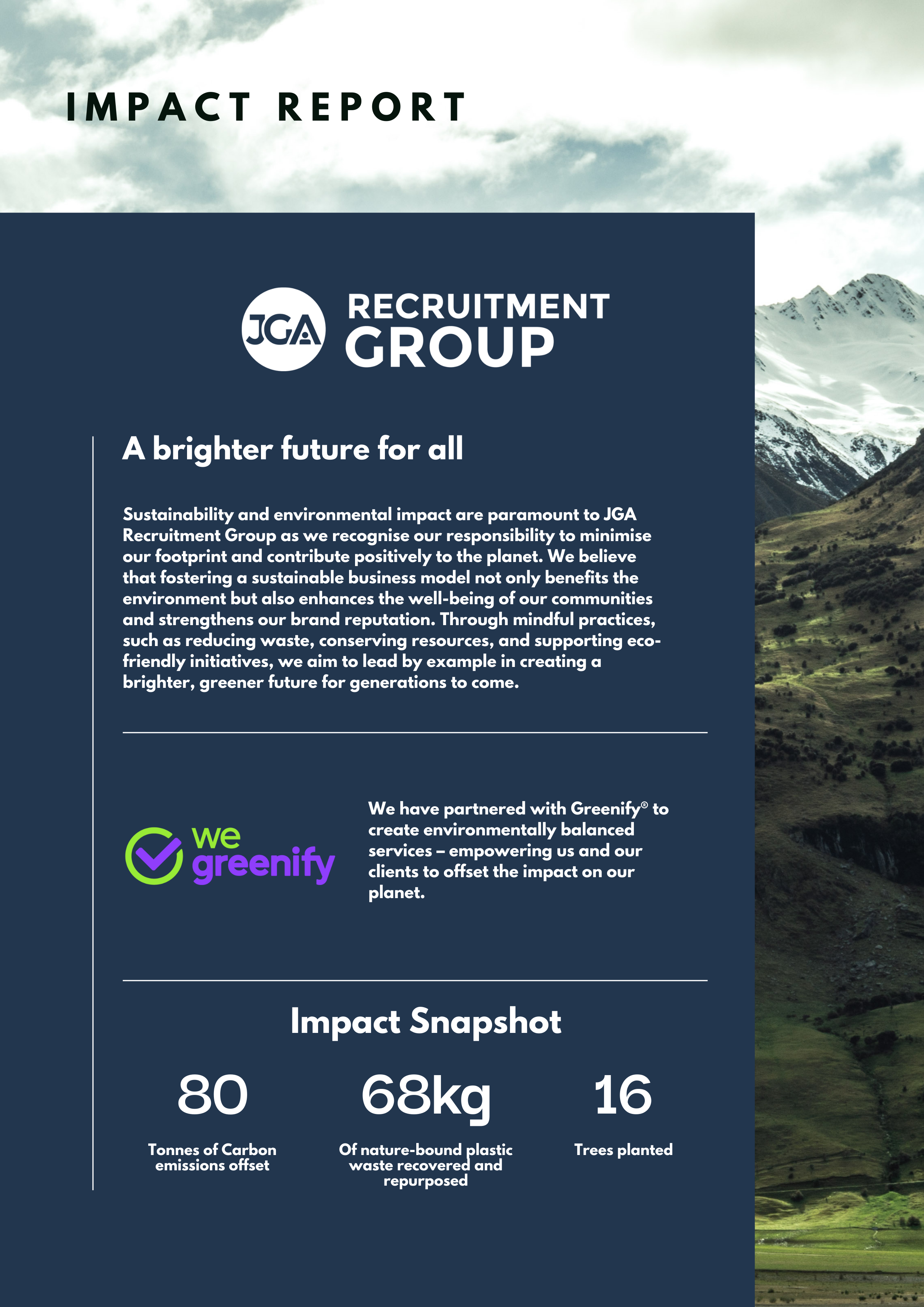
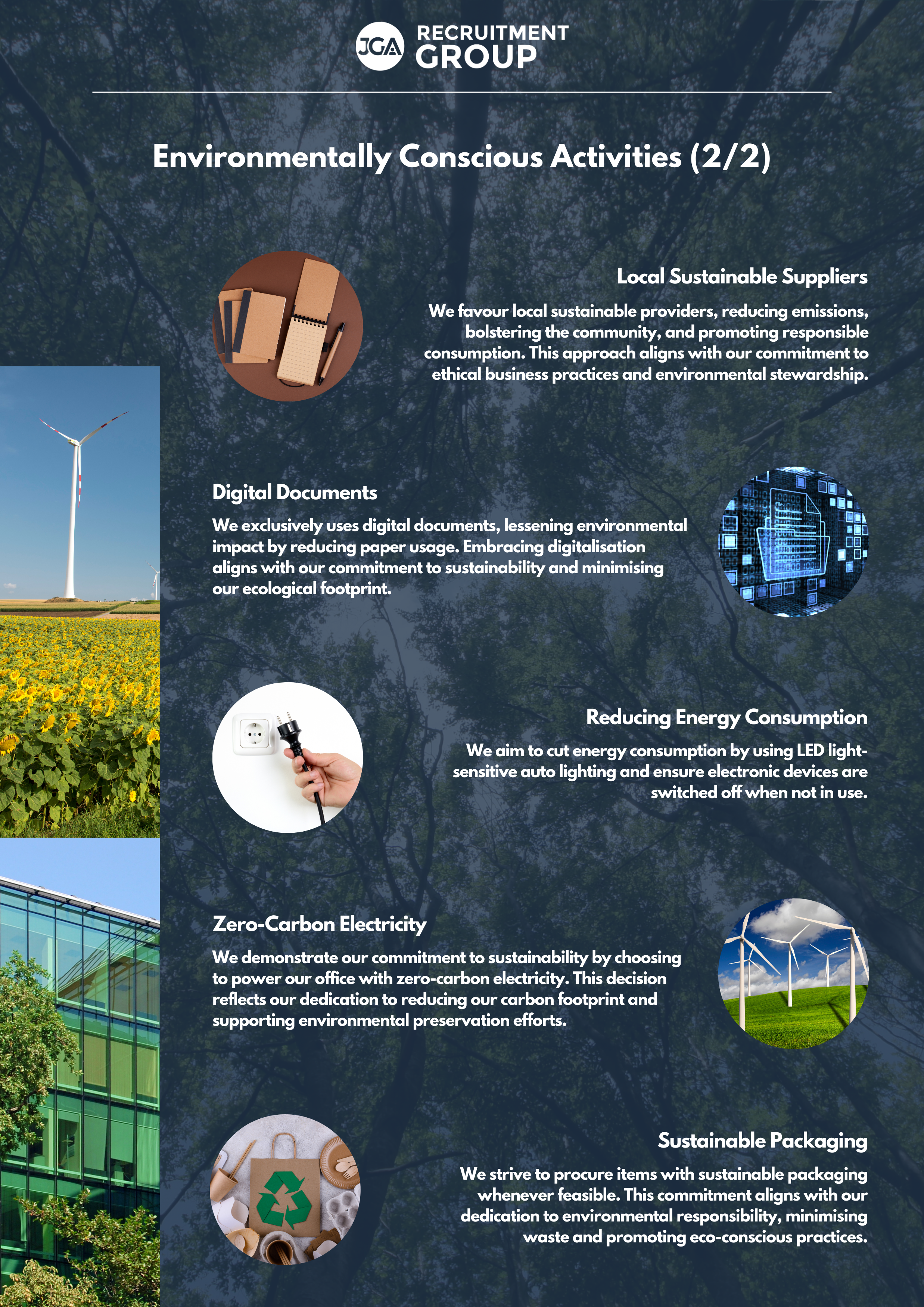
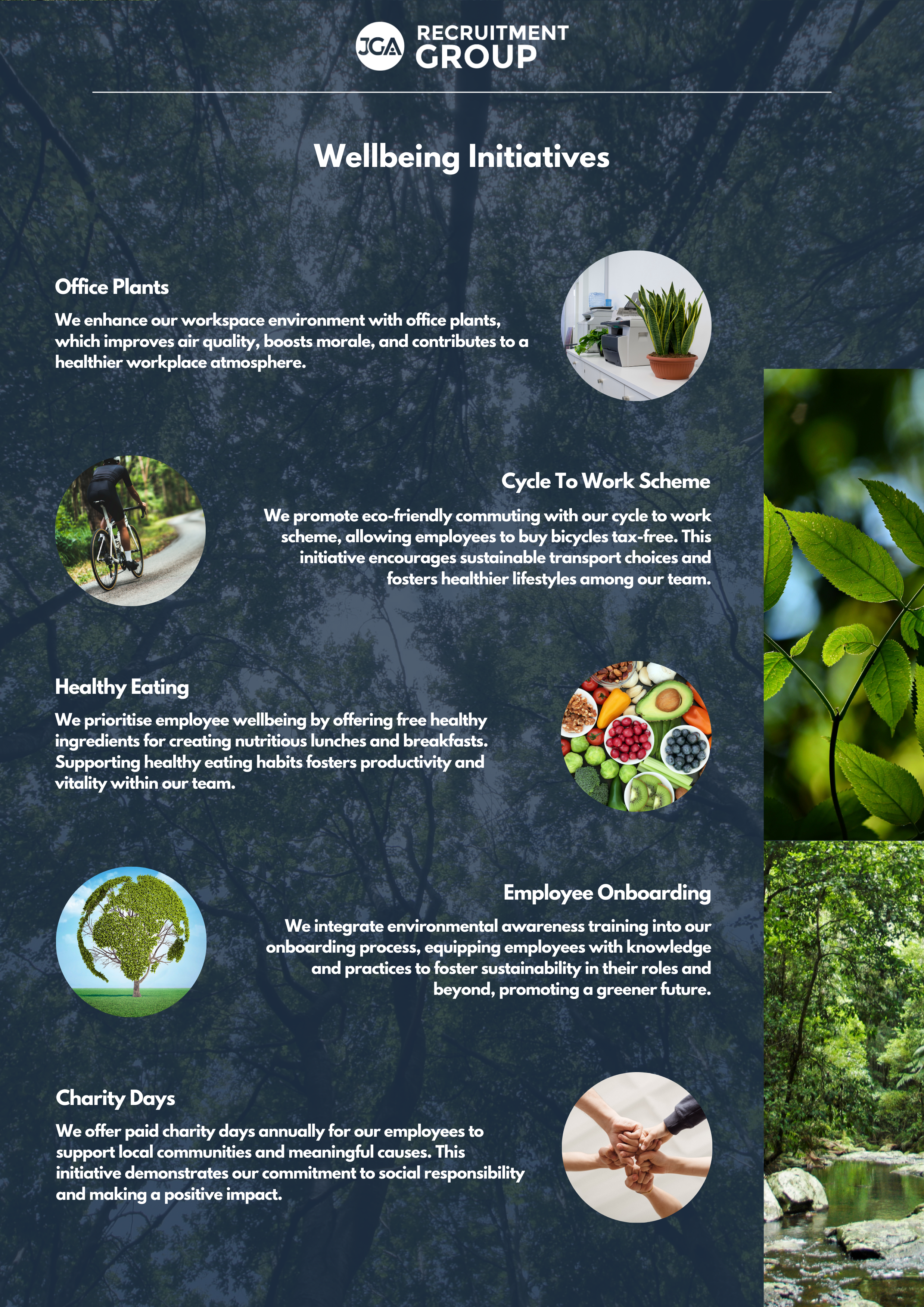
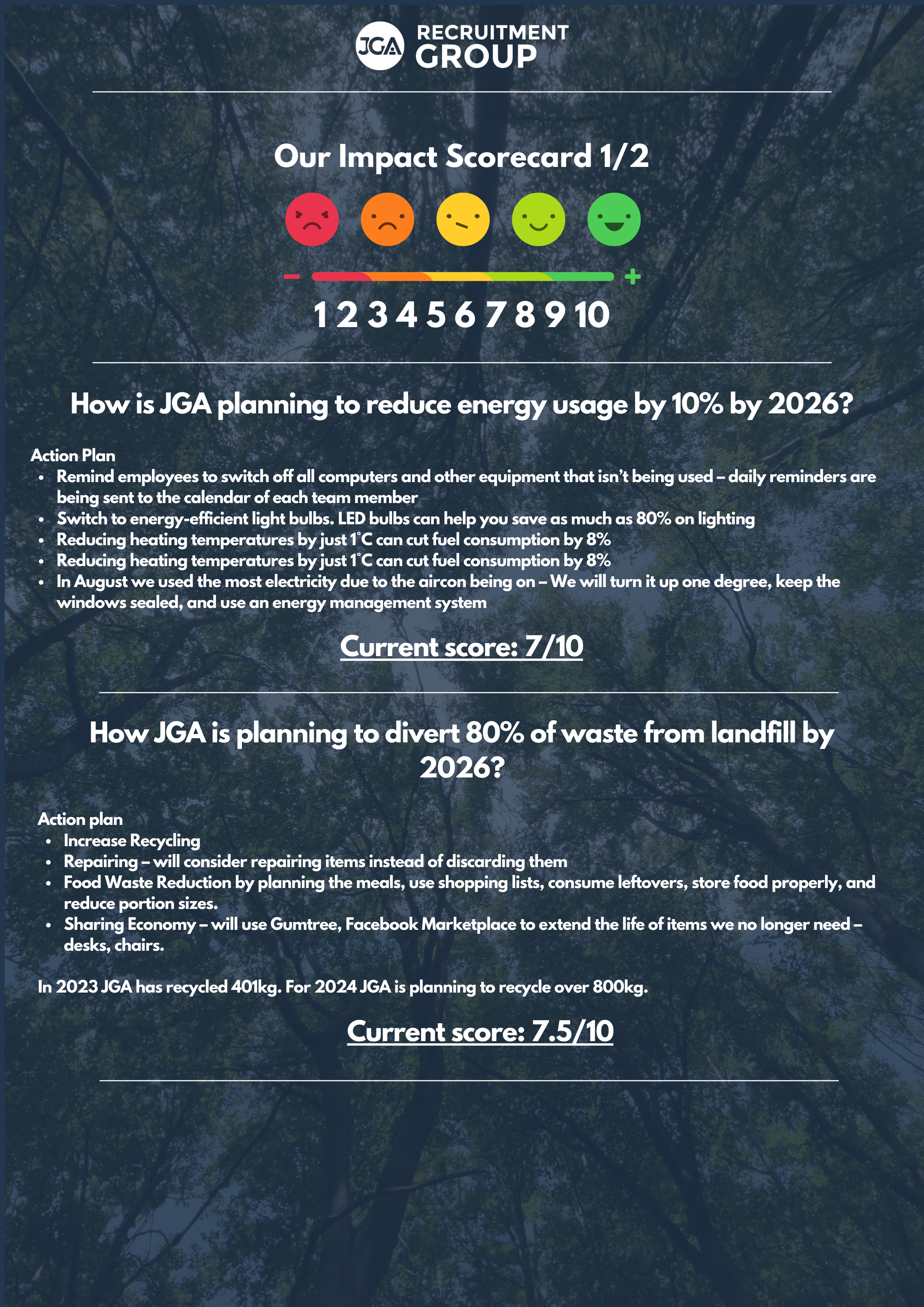
Sustainability and environmental impact are paramount to JGA Recruitment Group as we recognise our responsibility to minimise our footprint and contribute positively to the planet.

We believe that fostering a sustainable business model not only benefits the environment but also enhances the well-being of our communities and strengthens our brand reputation.

Through mindful practices, such as reducing waste, conserving resources, and supporting eco-friendly initiatives, we aim to lead by example in creating a brighter, greener future for generations to come.


https://jgarecruitment.com/wp-content/uploads/2024/03/JGA-Our-Impact-Green-Forest.png 1050 1400 Aaron Herkanaidu https://jgarecruitment.com/wp-content/uploads/2024/05/jga-logo-2024.png Aaron Herkanaidu2024-03-13 10:00:222024-03-13 09:29:45Our Impact

Negotiating Salaries via Email: Why More Employees are Choosing this Route

February 9, 2024/in Blog, HR NEWS, Payroll News/by Aaron Herkanaidu

It’s not surprising that salary negotiations have gone digital. Email is the go-to method of communication at work, for 74% of people. This is likely a reflection of contemporary working and a need for efficiency. Discussing compensation packages in this way eliminates awkward silences and makes sure key points aren’t missed. It also allows more time to curate responses.

Some candidates may be hesitant to be forceful or unsure what to mention, but emails provide a neutral platform for communicating a person’s needs and wants.

So why does this digital shift make sense?


More time to collect evidence and present proof

Discussing salary by email gives candidates the space and time to compile and present proof of their value. The rapid pace of face-to-face negotiations can overshadow the case they’re presenting. An effective email conversation provides a chance to meticulously construct an argument.


It’s quick but effective

Involved parties can reply in their timeframe and keep control of the negotiation. It also removes the pressure to instantly respond. Proper analysis of a counteroffer can be completed, and confidence can be expressed in the wording used.


A digital trail of every conversation

There’s no worries about discrepancies for applicants going forward as there’s a digital record of the whole conversation. It’s a reliable reference of all topics discussed and mutually agreed terms. The added layer of protection prevents miscommunication and conflicts later on.


How to craft an ideal salary negotiation email?

  1. Show appreciation and drive

Begin positively. Thank your new potential employer for offering you the role and let them know of your excitement. This will set the tone for the rest of the email.


  1. Express your intention to reach an agreement

Prepare your new employer for the topic of conversation. Be open and honest about your intentions to discuss your salary.


  1. Make your argument

Present your case. Why are you certain your value exceeds the initial amount proposed? Revisit your experience, achievements and any skills which are relevant to the role.


  1. Have a counteroffer ready

Look into the industry norms for your secured position. Propose a new figure that matches your value. It should be confident but remain within reasonable bounds. Back this up with supporting evidence.


  1. Ask their thoughts

Propose a call or meeting to speak about your counteroffer. This paves the way for continued negotiating. It also guarantees prompt responses to any queries or concerns.


  1. Be professional when signing off

Sign your email by reiterating your enthusiasm for the role at hand. Voice your eagerness to settle the discussion on pay, with a result that suits both sides.


Summary

In-person interactions still hold the most value, but using emails for salary negotiations presents a technical advantage. They illuminate the stress of direct discussions, allowing candidates to articulate their points without worry of being thrown off by unexpected queries.

Constructing a negotiation email properly demonstrates professionalism and assurance. Both traits should be recognised positively by a prospective employer.

Don’t underestimate emails as a key tool for salary negotiating. When it’s used correctly, outcomes can be secured that are mutually beneficial.


Written by Hannah Walters

https://hannahmillercontentncoffee.wordpress.com/

https://jgarecruitment.com/wp-content/uploads/2024/02/Negotiating-Salaries-via-Email-Why-More-Employees-are-Choosing-this-Route.png 900 1200 Aaron Herkanaidu https://jgarecruitment.com/wp-content/uploads/2024/05/jga-logo-2024.png Aaron Herkanaidu2024-02-09 10:39:232024-02-15 15:36:34Negotiating Salaries via Email: Why More Employees are Choosing this Route

The HR L&D Podcast Ranks 13th on the Talent LMS Best 55 Workplace Podcasts

January 22, 2024/in HR NEWS/by Aaron Herkanaidu

In the ever-evolving landscape of human resources (HR) and learning and development (L&D), staying informed and up-to-date is crucial for professionals seeking to enhance their skills and knowledge. Podcasts have become a popular medium for delivering valuable insights, and JGA Recruitment Group’s HR L&D Podcast has recently earned recognition by securing the 13th spot on Talent LMS‘s prestigious list of the Best 55 Workplace Podcasts from the L&D, HR, and people management space.

The HR L&D Podcast: Hosted by JGA Recruitment Group‘s Nick Day, The HR L&D Podcast has been making waves in the industry by providing engaging and insightful conversations with thought leaders, experts, and professionals in the fields of HR and L&D. The podcast covers a wide range of topics, from talent acquisition and employee engagement to leadership development and organisational culture.

Recognition on Talent LMS’s Best 55 List: Talent LMS, a leading platform in the learning management system space, recently released its annual list of the Best 55 Workplace Podcasts. This list aims to spotlight podcasts that offer valuable content, unique perspectives, and practical insights for professionals working in HR, L&D, and people management. JGA Recruitment Group’s HR L&D Podcast proudly secured the 13th position on this esteemed list.

Key Factors that Set The HR L&D Podcast Apart:

  1. Expert Guests: The podcast features interviews with renowned experts, industry leaders, and influencers in HR and L&D, offering listeners the opportunity to gain insights from the best in the business.
  2. Timely and Relevant Content: The HR L&D Podcast addresses current trends, challenges, and innovations in HR and L&D, ensuring that listeners stay well-informed about the latest developments in the industry.
  3. Engaging Conversations: The hosts of the podcast create a dynamic and engaging atmosphere, making each episode both informative and enjoyable for listeners.
  4. Practical Takeaways: Listeners can expect to gain actionable advice and practical tips that they can apply to their own professional development and workplace strategies.

The Impact of Recognition: Securing the 13th spot on Talent LMS’s Best 55 Workplace Podcasts list is a testament to the quality and impact of The HR L&D Podcast. The recognition not only reflects the podcast’s commitment to excellence but also highlights its contribution to the professional growth of HR and L&D practitioners.

As the workplace landscape continues to evolve, podcasts like The HR L&D Podcast play a crucial role in keeping professionals informed, inspired, and connected. Here’s to continued success in providing valuable content to the HR and L&D community!

Listen to The HR L&D Podcast here or on all major streaming platforms.

https://jgarecruitment.com/wp-content/uploads/2024/01/Talent-LMS-Podcast-2.png 600 800 Aaron Herkanaidu https://jgarecruitment.com/wp-content/uploads/2024/05/jga-logo-2024.png Aaron Herkanaidu2024-01-22 11:58:412024-01-22 12:12:21The HR L&D Podcast Ranks 13th on the Talent LMS Best 55 Workplace Podcasts

Why Global Payroll Holds the Key to DEI Success

September 19, 2023/in Blog, HR NEWS, Payroll News/by Aaron Herkanaidu

Diversity, equity, and inclusion (DEI) are more than just buzzwords. These three words are, in fact, vital for a thriving workplace culture. But where does global payroll fit into this picture? Let’s clarify our terms.

Diversity encompasses the variety of characteristics among personnel, such as ethnicity, gender identity, sexuality, culture, and nationality. Equity ensures fair treatment for everyone.

Inclusion creates an environment where diverse individuals feel valued and can contribute fully.

At the Intersection of Global Payroll, DEI

You might still be wondering what role global payroll professionals play regarding DEI. To begin, fair pay is crucial in maintaining employee satisfaction, and the connection between the payroll process and the employee experience has never been closer. Meanwhile, access to improving payroll data provided by more capable payroll solutions emerging in the marketplace is helping businesses maintain and achieve compensation parity across diverse global workforces.

According to a 2020 report by McKinsey, companies with the most diverse executive teams are more likely to outperform peers on profitability by 36%. However, although most employees believe their employer puts an emphasis on DEI, one in five (22%) say there is no one demonstrating its importance through action in the business, according to a 2021 Eagle Hill Consulting Survey. Meanwhile, a study conducted by the Harvard Business Review in February 2019 revealed that 75% of employees claim that the current DEI programs in place at their organization deliver no personal benefits.

We will get to the how shortly but suffice to say, payroll professionals have an opportunity to play a significant role in promoting and improving DEI in the workplace. Now, that’s exciting!

Payroll Holds the Key

Payroll leaders access more employee data than almost any other business function. If harnessed and leveraged correctly, this data can allow payroll professionals to be more active in supporting board-level objectives. A critical organizational goal for businesses is improving workplace culture and boosting corporate DEI. It’s quite possible that the C-suite could soon discover that payroll indeed holds the key to game-changing DEI results.

Payroll Data Can Advance DEI Initiatives

Payroll professionals have access to both the insights and the expertise to support, help, and implement equal pay measures for all. Payroll professionals also have the tools to comprehensively audit an organization’s compensation structure to identify gender, race, or other pay-related disparities. Audits can help identify pay discrepancies that create opportunities for payroll professionals to form alliances with HR to help bridge gender or ethnicity wage gaps.

A Rapid Technological Shift

Implementing DEI initiatives through payroll can be challenging if payroll operations are laden with outdated systems or processes.

Legacy IT systems hinder those yet to update which means they may be left behind in their ability to influence DEI initiatives as the systems may not give them access to the same level of data that newer solutions can provide. In addition, older systems mean more time is spent checking payroll processes leaving less time for payroll managers to focus on more strategic tasks such as DEI analysis. However, the rapid technological shift post pandemic has seen more businesses than ever undergo a software transformation— especially in payroll. These new solutions—due to improved automation—free up time for more strategic analysis and provide payroll managers with access to more data and reporting options to identify trends and potential DEI gaps.

Rapid digital transformation has infiltrated payroll operations to provide even more powerful payroll solutions which, in addition to streamlining processes and automating manual tasks, generates vast amounts of big data.
It is through the analysis of the payroll data that the industry can unlock the doors to DEI success.

Harnessing Payroll Data to Improve Pay Transparency

Closing the gender pay gap is not just fair; it’s smart business, too. Studies show that closing the gender gap could add $13 trillion to the global GDP. Therefore, embracing diversity and fair pay practices is critical for any business keen to identify ways to boost profits and innovation. By accessing payroll data that provides information concerning gender representation and associated pay across all levels of an organisation, payroll can promote greater organisational transparency around pay structures. Studies also show that increased workplace transparency positively impacts talent attraction, retention, and productivity.

Identifying Workforce Inequity

In addition to pay-related information, payroll data can also support diversity audits. Studies have repeatedly shown that businesses with the broadest diversity of perspectives benefit from greater profits, performance, and creativity. Well, payroll holds the key to the data that can highlight the diverse makeup of an organisation. Payroll professionals can analyse and identify diversity representations across all leadership levels of a global workforce. Auditing existing payroll systems may also identify other systemic issues contributing to workforce inequity.
For example, according to Human Resources Today, in 2015, Salesforce became the first U.S. company to conduct an equal pay audit, which led to $3 million (USD) in salary adjustments. Since then, the company has embarked on several DEI initiatives to create a more diverse and inclusive workplace for its employees. In 2020, Salesforce set up a Racial Equality and Justice Task Force led by senior executives and comprised of entry-level employees. The task force aimed to drive systemic change by listening to those affected, setting goals and tracking relevant metrics, and creating new programs and processes as part of the solution.

Creating Alliances for Successful DEI Outcomes

Businesses need to go beyond traditional practices and look to integrate and incorporate DEI initiatives into all daily operations, including payroll. To omit a function that can access such powerful data will only negatively impact the success of any DEI initiative. Hence, more than ever, payroll needs a pivotal seat at the table to foster positive alliances and coalitions with other functions, such as HR, finance, and IT, to maximise DEI impact. The journey toward gender equality is not a solo race. It’s a relay that requires collaboration, teamwork, and a unified commitment to DEI improvement from all business functions.

Achieving Equitable Workplaces for All

Unravelling the complexities of DEI and its relationship with payroll can be confusing. However, DEI awareness has highlighted the importance of fairness in the workplace, and this evolution represents a new opportunity for payroll professionals to broaden their remits (areas or roles officially assigned) and further raise the profile of the profession. A deeper understanding of the interconnectedness between payroll and DEI can result in businesses achieving more equitable workplaces for all. I say this because for employers, pay is not just about numbers—it is also about fairness and transparency.

Similarly, for those reading this, global payroll is not just about paying employees on time but also about enhancing the employee experience. Whereas, for employees, pay, rewards, or benefits do not solely define how happy they feel at work; it also hinges on how valued they feel in their roles – from receiving accurate, timely, and fair pay to being part of a diverse team where everyone has equal growth opportunities. Payroll influences all these considerations.

Integrating DEI into all aspects of the employee payroll cycle is critical if we are committed to cultivating inclusive workplace cultures that support happier employees who stay longer and produce more. If businesses truly wish to unlock the potential of their DEI initiatives, now is the time to engage the payroll keys required for their success.


Written by Nick Day, Managing Director at JGA Recruitment Group – the UK’s leading Payroll & HR Recruitment Consultancy and Executive Search Firm.

JGA Recruitment Group| Payroll & HR Recruitment

E-Mail: [email protected] | Tel: 01727 800 377

Copyright©: JGA Recruitment Group 2023

https://jgarecruitment.com/wp-content/uploads/2024/02/Why-Global-Payroll-Holds-the-Key-to-DEI-Success.png 900 1200 Aaron Herkanaidu https://jgarecruitment.com/wp-content/uploads/2024/05/jga-logo-2024.png Aaron Herkanaidu2023-09-19 15:12:162024-04-12 11:35:30Why Global Payroll Holds the Key to DEI Success

JGA is officially one of UK’s Best Workplaces™ for Women!

September 6, 2023/in HR NEWS, Payroll News/by Aaron Herkanaidu

JGA Recruitment Group is thrilled and proud to announce that we have been officially recognised as one of the UK’s Best Workplaces for Women™ by Great Place to Work®! 🎉

This prestigious recognition is a testament to our commitment to fostering a diverse and inclusive workplace, where all our team members can thrive and achieve their full potential. We believe that diversity is not just a buzzword, but an integral part of our success as an organisation.

At JGA Recruitment Group, we have always strived to create an environment that empowers and supports women at every level. We value their unique perspectives, experiences, and contributions, which play a crucial role in driving innovation and growth.

Receiving this honour would not have been possible without the collective efforts of every member of our team. Their dedication, passion, and unwavering support for each other have made this recognition possible.

As we celebrate this achievement, we also recognise that our journey towards an inclusive workplace is ongoing. We will continue to listen, learn, and evolve our practices to ensure that JGA Recruitment Group remains a place where women feel valued, respected, and empowered to pursue their professional ambitions.

We extend our heartfelt gratitude to our amazing team, clients, and partners for being a part of our journey and contributing to our success. Together, we will continue to make a positive impact in the recruitment industry and beyond!

About Great Place To Work UK

Great Place to Work is the global authority on workplace culture. Since 1992, they have surveyed more than 100 million employees worldwide and used those deep insights to define what makes a great workplace: trust. In 2022, they launched the first-ever annual UK’s Best Workplaces™ for Wellbeing list of organisations that delivered exceptional wellbeing support for employees across all levels and departments. For more information, visit www.greatplacetowork.co.uk

Contact JGA Recruitment Group

Contact JGA Recruitment to find out more and discover how in partnership, we can locate the top talent for your business and take positive steps to create a sustainable, brighter future for all: [email protected].

JGA Recruitment also publishes two leading business podcasts: The Payroll Podcast and The HR L&D Podcast.

https://jgarecruitment.com/wp-content/uploads/2023/07/JGA-is-officially-one-of-UKs-Best-Workplaces™-for-Women.png 600 800 Aaron Herkanaidu https://jgarecruitment.com/wp-content/uploads/2024/05/jga-logo-2024.png Aaron Herkanaidu2023-09-06 14:00:142023-10-18 09:03:22JGA is officially one of UK’s Best Workplaces™ for Women!

Blockchain and cryptocurrency – Do we really understand what these technologies are? Interview with Anita Lettink

July 19, 2023/in HR NEWS/by jga2023

In this exclusive interview, Nick Day, Managing Director at JGA Recruitment Group interviews Anita Lettink, SVP, Strategy & Alliances at NGA HR all about blockchain and cryptocurrency. We discover more about what blockchain and cryptocurrencies are, and more importantly, how these technologies will impact the future of Payroll and HR.

Anita is responsible for Strategy & Alliances globally where she is responsible for ensuring strategic value propositions are developed and brought to market for NGA HR. Anita has written several excellent articles on Blockchain technology, and it was these articles that led me to invite Anita to this interview.

This interview will attempt to demystify blockchain and cryptocurrency. It will endeavour to separate the hype from reality. It will take readers on a journey of understanding concerning how blockchain, crypto and DLT technologies are likely to impact the payroll departments of tomorrow.

Interview

Nick Day: I’ve been fascinated by the articles Anita has published concerning Blockchain technology and its potential impact on the payroll and HR industries.

Blockchain is a huge buzz word out there in the market, and today I want to demystify blockchain and cryptocurrencies to find out how they may impact and be utilised in the payroll departments of tomorrow?

Blockchain is also still a highly experimental technology, and I want to find out if it is advanced enough for any software provider to be able to recommend it for payroll purposes?

However, before we dive deep into these complex subjects, I would like to introduce Anita Lettink to you all! Anita, can you explain your payroll journey to date and why you believe it is so vital that we understand how future technologies might impact upon both payroll and HR industries?

Anita Lettink:  When I joined in 2001, HR and payroll, at that time was focused entirely on ERP. My job was to consider how clients could make the best use of technology so that delivery to employees was as effective and as efficient as it could be.

Throughout the years, HR has been on a journey to engage employees, to make the employee experience better. With the opportunities that came with the cloud, you can bring HR to people who matter most, because it’s people who ultimately create a business and who run a business.

To ensure people get paid on time and are appropriately screened, you must understand new technologies. Subsequently, understanding how businesses can deliver HR and payroll services in the best way to its employees is a big part of my focus.

Nick Day: You said the most significant barrier to clients making the change over to cloud solutions would be fear, so fast forward to 2020, how do you see the future of payroll changing now?

Do you still view fear as being the most significant barrier for these changes taking place?

Anita Lettink:  I think the most significant barrier was risk rather than fear. Consider a payroll owner in a company who has everything running smoothly. Why would they want to consider doing anything that may jeopardise this very stable payroll environment? I think this is still the case because there is no financial business case for migrating a payroll that runs smoothly, from on-prem to the cloud.

That is why there must be more on offer than that. I think you see that right now in the enterprise segment, which is, of course, is a big focus for NGA. For example, if you have 50,000 employees on your payroll and everything runs smoothly, unless there is something big happening in your company, think mergers, acquisitions, etc. Ultimately, you will want to keep everything as stable as you can. However, we also see enterprise clients move to the cloud because of improvements concerning its ability to interface with the employee.

In payroll, clients are also moving over to the cloud, particularly in the mid-market segment, because, for them, it’s critical to keep everything together. So, when HRIS moves, they also move core HR and payroll.

Nick Day: Interesting, so what typically might be some other reasons for a business looking to make a change?

Anita Lettink: When it comes to multi-country businesses, at a certain point, they simply do not want multiple local systems anymore. And so, when they move to the cloud, they have a business case to do so because they’re moving away from, let’s say, 25 or 30 different payroll systems, to one payroll provider. It is usually a hosted payroll in the cloud in some shape or form. That is an important driver.

It is when clients move to a single core HR system, that they realise that they must start establishing interfaces to all these different systems that are across multiple countries. The move doesn’t just affect payroll and HR systems either, which is why this is usually the moment clients decide to move everything to the cloud.

Nick Day: In an age of globalisation, I guess it’s a busy time for suppliers like yourselves for companies looking risk-averse solutions that can deliver a full solution to multiple countries.

It leads me nicely into the blockchain, which is also known as distributive ledger technology, or DLT. Can you just clarify for the readers what blockchain or DLT is?

Anita Lettink: Yes. I’m going to keep it a little bit high level instead of bursting out in a full technology overview. So, on a high level, really what you do is you create a secure ledger of all the transactions, and you copy that ledger on a decentralised infrastructure.

What happens is this. If someone makes a transaction, that transaction is added to the ledger, the ledger is changed, and the change is then broadcast to all parties participating in the network. They then validate it and approve it.

Once that transaction is complete, it’s added to a block. Once the block is full, it’s then added to an existing chain of blocks. That’s why we call it blockchain.

It’s also encrypted, which is very important because that means that the blocks can’t be changed or tampered with, and that is a significant advantage of the blockchain or the DLT infrastructure.

Nick Day:  So now we know a little bit more about what blockchain is in simple terms, how do you think it’s going to impact or change payroll?

Anita Lettink: What I think with blockchain and payroll is that it’s not so much payroll itself that’s going to be changed, but it’s the way we provide data to payroll and the way that we get data out of payroll that will feel the changes of blockchain.

The reason why I say that is because as you know when you set up a payroll, you use PII (personally identifiable information). We must consider GDPR compliance too because people are rightfully worried about who has access to their data and who hasn’t. Subsequently, I think there is a drive for people to own their data to control and understand what happens with it.

At the same time, you also see blockchain applications becoming very strong within the FinTech sector, so it’s financial technology.

Banks are looking at blockchain to secure transactions and to ensure that when transactions do happen, they are encrypted and secure. Everyone must also understand and trust the transaction process because trust is also critical for the evolution of blockchain development.

So, to answer your question, no, I don’t think it will change how businesses process payroll that much, but I do believe it will have a significant effect on payroll processes, pre-payroll and post-payroll.

Nick Day: So, what do you see as being the main benefits of blockchain and are there any reasons why businesses should also be cautious in terms of risk associated with implementing the technology?

Anita Lettink: If you look at the benefits of blockchain, it’s still early days. We’re slowly starting to understand how to use blockchain and discover what the advantages are. We’re also beginning to understand what some of the disadvantages are!

As this technology progresses, what you will see is that different versions will start to emerge. Think about permission blockchains that are used in companies versus permission-less blockchains that are used by cryptocurrencies. Already we have two variations of blockchain developed for two very different purposes. So, it is inevitable that more changes will follow.

This also means that we still are watching, piloting and creating use cases for how blockchain can be applied within both the HR and payroll industries.

I think it’s good to be cautious because there’s significant hype around blockchain, especially around cryptocurrencies and Bitcoins. There’s also a concern about energy consumption, which, although mostly associated with permission-less blockchains, it is still something businesses will need to consider.

Nick Day: Blockchain is undoubtedly becoming a bit of an investors buzz word right now. As you articulated earlier, it has become hard to separate the hype from reality.

For example, in December 2017, a New York’s drinks brand called the “Long Island Iced Tea Company” changed its name to “Long Blockchain Company“. The company stock subsequently rose by 289% on the back of the announcement – and that was despite the fact they had absolutely no blockchain-based products to sell and no concrete plans to develop any blockchain technology whatsoever.

The change of direction failed because NASDAQ removed them from the exchange for misleading investors. However, it does highlight how easy it was to convince investors that they were worth investing in, just based on them adding the word “blockchain” to their company name.

Therefore, I think it is foolish to ignore blockchain and the impact it can have.

However, it is now twelve years since Satoshi Nakamoto proposed the first blockchain. Yet, we’re still not seeing any significant developments that integrate blockchain-based payroll technology into current systems.

We’ve also not witnessed businesses move entire payrolls away from user control-based bases, into blockchain systems.

It is supposedly all relatively new technology, but then Nakamoto developed it twelve years ago.

Why do you think it’s taken so long to get blockchain to where it is now?

Anita Lettink: I think what has happened is that the focus on cryptocurrencies has not done the technology any favours. Especially not when it comes to these initial coin offerings. There’s also significant mistrust around this technology.

For instance, recently, Bloomberg said that over half of these initial coin offerings died within four months after tokens were sold. So, people have lost considerable sums of money!

The other thing is the idea that privacy is dead was a reality for a long time. But recently, enormous data breaches have taught people that security matters. Therefore, we need to encrypt data and ensure no one can access it without permission because we don’t know where it ends up or what people may do with it.

I also think several events and trends are converging to make this technology more interesting. There are already mainstream developments in FinTech, which are now out in the public for everyone to use.

For instance, in the area of international payments, a Spanish bank has introduced an app where everyone can wire money home, and it will arrive the next day against a fraction of the fee that you paid in the past for an international money transaction.

There are also, for instance, shipping companies that use DLTs to make sure that what goes in the containers comes out of the containers at the endpoint and a blockchain ensures that these shipping lists are secure.

I think when you look at DLT, companies are starting to use it. It’s maybe more in the B2B (business to business) sectors than in the B2C (business to consumer) areas right now, but I firmly believe that it will become mainstream in the next couple of years. When it does, people will start to use it, whether they know it or not.

Nick Day:  I haven’t seen it anywhere in the recruitment market space for payroll, but I know in my research that there are many blockchain-based payroll companies which have started to launch.

Also, many companies have been raising their seed capital by using ICOs, which are initial coin offerings, using cryptocurrency-based funding methods to get their ventures off the ground.

It is interesting because a lot of these companies disappear quite quickly as well! Despite companies starting to launch in places like Silicon Valley, we certainly haven’t quite seen it enter the mainstream yet.

However, is did read an article by KPMG, who advised on a £5,000,000 launch of ETCH, a Dublin based service, which claims it is to be “the first innovation in payroll since the industrial revolution“, and they’re employing the Ethereum blockchain to allow employers to pay workers in real-time.

For the larger businesses out there, I can see why they would want to consider the technology, but it sounds like it might take another couple of years before we see it used widely, especially in payroll.

Anita Lettink: I also think that before you might see it in payroll, there are other areas in HR where the use cases are already brought to market.

For instance, several educational institutes all around the world are now publishing certificates and diplomas on blockchains. So that might be a use of blockchain or DLTs, which regular people like you and I will experience far before we see anything in the financials.

Nick Day: Let’s discuss blockchain security, especially the risks concerning its use within payroll-related applications.

We have mentioned GDPR already, and we know that right now, it is more important than ever that personal data is protected. From a data owner perspective, the problem of protecting personal data can be three-fold. There’s often a lack of ownership (because once it’s been entered, a third party can own the personal data). There’s a lack of transparency (because users can’t audit what happens with their data). And of course, there is a risk of security breaches, (because when databases hold personal data, there can be a single point of failure).

Subsequently, how can blockchain help to keep personal data safe, especially from a data controller perspective?

Anita Lettink: In principle, when you give an employer your personal data, they need to promise to keep it safe (and not to sell it to any third parties, for instance). Therefore, there is the trust that you have in this relationship, and hopefully, you trust your employer to do the right thing here.

Also, if an employer outsources a payroll or HR service to a third party, like NGA for instance, then there is legislation in place on what can and cannot be done with that data, and it’s quite restrictive.

Finally, we must remember that we only give employers access to personal data because they need to pay taxes and social security on our behalf. Therefore, it is unavoidable that they, for instance, disclose your name to the HRMC or other relevant authorities that require it for tax purposes.

It is different for the gig economy, however, because all that responsibility flips to the worker. That is because, in a gig economy, the employer pays the worker, who is then responsible for paying their own taxes and social security. Therefore, already some of that responsibility moves away, and this means that less personal data resides with “the employer”.

Ultimately, I think there’s always going to be a level of trust needed between employers and employees. We need to trust that personal data is being handled in the right way.

Sometimes an employer may need to ensure that employee data remains protected when it is disclosed. This data could be preserved by introducing blockchain or a DLT. These technologies would also provide the employee with better visibility regarding who uses that data and when.

With blockchain, you could also have your personal data protected but still provide your employer with permissions to disclose it in specific circumstances.

Nick Day:  It is critical to understand that there are two major strands to how blockchain systems can work. As previously mentioned, you can have private blockchains and permissions, but you can also have permission-less blockchains which can be public and open.

I highlight this because, now, the buzz word everyone is familiar with is Bitcoin. Everyone seems to have heard of Bitcoin. The second biggest is crypto coin is Ethereum.

They’re the two leading blockchains, and they are examples of two permission-less blockchains, that means they are public, and they are not password protected. This has been a significant barrier for many of the banks in adopting technology.

Like the banks, most companies would not want their transactions to be made publicly available to anyone who wants to view them either.

However, we also now know that it is possible also to create private permissioned blockchains, but I understand these have a significant flaw. This flaw is that only a handful of people can update and validate transactions private blockchains.

Inevitably, as single points of control, these individuals become potentially unique points of failure. This leads me to three vital questions.

  1. So, could this make them an easy target for hackers?
  2. If hackers identified these individuals, could they gain control of the entire blockchain by attacking only a small number of computers?
  3. In terms of risk, security, and transparency, do you think these risks will make blockchain technology prohibitive in terms of businesses taking advantage of blockchain applications, or not?

Anita Lettink: I think it’s all about trust and what level of trust clients are prepared to accept. Comparable to banks, you store your money with a bank that you trust. You hope that they do the right thing with your money and that you don’t lose it.

Also, keep in mind that blockchain is encrypted whether it’s permission-less or permissioned. So even if you have access to the blockchain, it does not mean right away that you have access to the data that is stored in the blockchains.

But let’s talk a little bit about permission-less versus permission blockchain or private blockchain because that is important. It’s also essential to understand the differences.

Most of these cryptocurrencies are permission-less blockchains. It means that they allow anyone, you and me, to create an address and to start interacting with the network. We can run a node, and we can participate in the verifications of the transactions.

It means that in a cryptocurrency transaction we compete for payments because the one that verifies the block (and all the other parties) will each get a little bit of cryptocurrency, as a thank you, for creating the block. That is also why these are so popular. You can even earn money by joining a permission-less blockchain.

Now, when you look at a permissioned blockchain, that’s a closed ecosystem. Usually, it’s created by a consortium of companies who need to do business with each other, or for some other reason, are in business. The purpose of those blockchains is to create a way to exchange information and record transactions efficiently.

For enterprises, this can be a way to instil trust and transparency. For example, the Hyperledger Foundation is an example of an open-source initiative for these types of blockchains. With these types of blockchains, enterprises (and people like you and I) can choose who is running that network. Whereas in a permission-less blockchain we have no idea who is running the network because anyone can join.

In a permission blockchain, once you have verified the parties that are participating in that network, you can augment the level of trust so that people like you and I know it’s secure. We can then have the confidence and trust that these businesses will operate the blockchain smartly and effectively.

Therefore, when we’re talking about trust, permissions models will probably be a better fit for payroll or business-related purposes.

Nick Day:  It doesn’t necessarily take away the potential for there being a single point of failure, but the reality is you only enter in with an understanding of the risks before you join, once trust is already established.

However, there are more risks I want to highlight. I think it is essential we all understand what blockchain is and blockchain isn’t.

For example, I believe a risk within blockchain technology is for it to function as intended; the code behind the smart contract needs to be free from bugs. I’m not a software expert, but if blockchain technology was being used to make a payroll payment (using a smart contract), could a bug potentially allow the receiver of a payroll payment to request that payment multiple times? In fact, couldn’t there be a risk of these payments repeating for some time before the blockchain system has a chance to update itself?

I know, of course, all software, including professional enterprise-level software, will contain bugs. Still, smart contract payments are irreversible with blockchain, so if this happened concerning a payroll payment, there would be no chance for a company or a payroll manager to get that money back if a bug like that existed and was exploited.

I highlight this because there is an example of such exploitation which took place in 2017 when nearly $55,000,000 worth of Ethereum was stolen because of an exploitable bug within the Ethereum source code.

It became one of the most prominent back doors in hacking history, and it came down, quite simply to the capital T in line 666 of the code. Had that been a small T, it would have completely prevented the hack. It’s quite unbelievable that such a little thing can result in a £55,000,000 worth of stolen crypto.

I’m making the point because, in publicly released code, even Microsoft says they have about 10 to 20 bugs per thousand lines, and they confirmed that only a very tiny proportion of code is ever technically perfect.

Therefore, do you think in terms of utilising blockchains for processing payroll payments, that it will be too difficult for it to be developed as an effective and risk-free payroll solution?

Also, from a payroll solution perspective, do you think that attaining satisfactory code perfection levels will make it too tricky for payroll software companies to develop suitable solutions on a mass scale?

Anita Lettink: No, I don’t think so. I did say that I believe that the first application will be in pre and post payroll, but I also think you can create a payroll that runs on blockchain.

Of course, no software is free from bugs. However, this hasn’t prevented businesses from trusting software to run our energy infrastructure, to run our ATMs, to run payrolls for millions of employees and to run everything that we rely on in our lives.

We trust software to run the internet and bugs happen, but they’re usually not in the multitude of the example that you just gave.

However, could it happen? Absolutely! No software is bug-free, but it could also occur today with the current payroll and payment software that we are using!

With the smart contract, the idea is that once you enter into it, several obligations need to be fulfilled before the money transaction happens.

You need to make sure there is not an indefinite repeat of these transactions or these conditions. If you do this, then the payment will not repeatedly happen because once the requirements are satisfied and the payment has been made, the smart contract ends.

So, could that be exploited? I’m pretty sure there must be someone in the world who will, but I do not think it will be a regular event. As with everything, payroll is very regulated. When you run payroll, you already know upfront what your payroll will look like from a financial point of view. Businesses plan for all these types of expenditures, especially payroll, as it involves such significant sums of money.

With these smart contracts, it will probably be smaller payments, but there are still financial departments somewhere in your business that is keeping track of monetary payments. Therefore, someone will notice after it starts to happen that you keep paying the same person the same amount repeatedly. It might be too late in that specific situation, but I don’t believe that it will be able to happen indefinitely.

I also don’t think the amount on the smart contracts will be anywhere near the 55,000,000 of the Ethereum. If it is, I am in the wrong job!

Nick Day: Let me explain then what a smart contract is.

A smart contract is essentially a set of promises written out in code which works using statements like, “if this then that“. So once set in motion, it is designed to be entirely dependent on its code, and it is irreversible.

Subsequently, a smart contract between a company and a contractor that dictated a certain number of hours of work had been completed, would require a smart contract, which automatically pays the contractor. It is achieved by deploying a piece of remotely executable code, linked to an instruction from the employers’ bank account to the contractors’ bank account.

The beauty of this set-up is that we would no longer need to contact banks on a monthly payment run along with all the payroll processing time it entails because you just deal directly with one another. With a smart contract, there’s a guarantee that the work is completed too.

In addition, my intention with the £55,000,000 example wasn’t to scaremonger; it was to highlight whatever solution businesses move forward with, if it is blockchain, we shouldn’t fear it. We need to recognise that there are risks associated with all software used. For businesses using ERP software right now, there are still risks. There are still hacking attacks, phishing issues and security risks.

However, these stories often don’t make the mainstream news. In contrast, blockchain is so mainstream, that any slight error or a problem occurring within any application of the technology is highlighted exponentially, so everyone hears about it.

What we need to understand is that blockchain technology coming and there are risks, but hopefully, NGA and other service providers are going to try and minimise and mitigate these risks as much as possible. Why?

Ultimately, software evolves to help improve efficiency and improve the way that we do things.

One of the significant advantages of blockchain is speed. It’s incredibly fast, but there is a cost for this speed! The cost can be found in the fact that blockchain transactions tend to use up considerable energy consumption, and computing power because they’re verified using very sophisticated algorithms. As the size of the blockchain grows, which is every time there’s a transaction, it grows and grows and continues to grow! Subsequently, the requirements for storage, bandwidth and computing power is going to increase.

So, will scalability be a potential barrier to blockchain implementation in the long term?

Anita Lettink: It’s an interesting question because on the one hand side you have technology that can help you establish trust and transparency, and on the other hand side because of this trust and openness there is a lot of energy consumption, which is a concern.

If you look at the public blockchain, remember that I mentioned earlier that anyone could be a user or run a node. That means, the more nodes that exist, the more computers, the larger the network becomes, and the more computers there is, new transactions need to be replicated to, and that is one of the primary reasons behind this energy consumption.

When you are looking at permission blockchain, you can control the number of nodes in the infrastructure. Therefore, the energy consumption is much lower.

Energy consumption is a concern, but it all depends on the application, and I also know that within the industry, there’s a significant focus on thinking up smart ways to reduce these energy needs.

Nick Day: So, by the time we potentially see blockchain in the mainstream, do you believe there is going to be a significant reduction in the way that energy consumption is used to power it?

Anita Lettink: Yes. Power consumption needs to reduce for the technology to be truly scalable, especially for large transactions.

Nick Day:  So how do you see the blockchain technology road map evolving concerning payroll over the coming months or years?

Anita Lettink: What will happen is that many companies like ours are experimenting with use cases and are starting to understand what works and what doesn’t and where it adds value and where it doesn’t.

These educational certificate and diplomas are an excellent example because once you’ve put those on the blockchain, the information is there, it’s secure, it’s encrypted, and no one can tamper with it. It’s almost a guarantee to the employee that yes, they completed that study and gained that qualification. It also says to the employer that yes, this person went through this institute and got a diploma or certification. In these cases, it almost becomes a straightforward application.

The same will happen in payroll. For example, you could imagine that as an employee, you start to work for a company, and you give that company access to your personal data to run payroll, but then you withdraw that permission the moment that you exit the business.

Right now, if you left your current employer, you may be unsure whether your information is removed.

There’s always some legislation involved with that because as an employee, you cannot wholly withdraw your personal data from and employers record for legislative purposes. But still, it gives you more control over what someone does, not only your employer but with your data.

Ultimately, I think that we are only scratching the surface of what is possible. However, I also believe we will come to a point in the next few years where we understand where it’s instrumental and where we just shouldn’t bother.

Nick Day: Are there any blockchain innovations that you’re involved in right now, that NGA is fully engaged with testing that you’re able to share?

Anita Lettink: Yes. We are fully involved in testing, and we will start to publish about that a little bit later in the year, so here I’m going to ask for your patience, and I hope for your curiosity!

Nick Day: Now, I must ask this question because before I started my research into blockchain, which takes a little bit to get your head around, I thought it was all about Bitcoin.

Everyone has been talking about Bitcoin and cryptocurrency. We have seen in the news, that people have made significant fortunes on the back of it too.

However, we haven’t spoken about cryptocurrency yet, which is crucial as it is vital that we separate blockchain from cryptocurrency.

After all, cryptocurrencies have very little to do with the benefits of blockchain applications. Hopefully, by reading this far, you have got a good feel for that already!

There is no denying that there is considerable hype around cryptocurrencies right now. So, it would appear to be a natural evolution of the workplace that businesses will eventually start paying employees in cryptocurrencies.

Some companies are doing this already. They are predominantly companies already in the FinTech space. Still, an example would be Japan’s GMO Internet, which announced they would allow workers to take up to $890 a month in Bitcoin.

However, cryptocurrency is also extremely volatile for those that follow the markets. It’s not unknown for the price of Bitcoin, Ethereum or any of the other better-known crypto coins to increase or decrease by ten or even 20% in value in a single day.

With this volatility in mind, do you think there will ever be a wide-scale company adoption of the idea of payrolling its employees in cryptocurrency?

Anita Lettink: I think it all has to do with our acceptance of cryptocurrency. This is not so much about payroll. First, we need to see cryptocurrencies are stabilise because they are indeed extremely volatile. Cryptocurrencies can lose 10% or 20% of their value one day to the next.

Whereas, right now if you are being paid in pounds, euros, or dollars, you are relatively sure that what you buy today you can buy tomorrow, assuming inflation is not running at an all-time high.

The reasons why we want to be paid in pounds, euros, or dollars is because when we go to a shop or when we shop online, other people trust us to pay them in that currency. It’s not enormously costly for us to do so either and currently the whole infrastructure relies on these currencies already in use.

As soon as the mainstream starts to trust cryptocurrency, I think it’s very feasible we begin to get paid in cryptocurrency. Of course, that is provided its volatility stabilises, and everyone else accepts it.

However, why would anyone want to be paid in cryptocurrency while we have access to a stable currency?

Ultimately, we will see one or two cryptocurrencies becoming mainstream, but it will take a while. It’s still too much hype.

Nick Day: I agree. It is worth mentioning that there are additional tax implications as well for being paid in Bitcoin, or any cryptocurrency. Especially if, as an employee, you convert the Bitcoin back to Sterling.

HRMC terms them “Crypto assets”, and as new technology is leading to new crypto assets being created in a wide range of forms and for different uses, they have warned traders, investors and holders, that they will need to pay capital gains tax on any profits made.

Just by the HMRC making that statement, it suggests that they are starting to take cryptocurrency more seriously, which is interesting.

Currently, the HMRC terms crypto-assets as “cryptographically secured digital representations of value or contractual rights that can be transferred, stored or traded electronically.”

All crypto assets use some form of blockchain but, as I hope this eBook has already highlighted, not all applications of blockchain involve crypto assets.

For clarity, the HMRC does not consider crypto assets to be currency or money. Instead, as outlined in the Crypto asset Taskforce report, the HMRC have identified three types of crypto assets which are exchange tokens, utility tokens and security tokens.

The critical observation here is to reinforce Anita’s earlier point – why would employers want to pay employees in cryptocurrency when at present, we already have a very stable mainstream currency?

In the UK, Sterling already does the job well enough, and it is much easier to spend on the open market too.

Anita Lettink:  It is an interesting development by the HMRC and by the regulators in general. A few years ago, they just wouldn’t touch it. Therefore, it is an exciting development to see regulators looking at cryptocurrencies and getting more involved, creating opinions and bringing us warnings or updates about what people who hold them should do with them.

You also see many financial institutions now investing in cryptocurrencies. The whole establishment is beginning to understand that yes, this is something that they need to get engaged in because otherwise, this will be a development that runs away from them that people will want to use. After all, it offers them a more natural way to move money across the world.

However, I can imagine that regulators want to understand how that money flows across geographical borders and what they need to do to, for example, to protect people from laundering money through these types of currencies.

It will come. Right now, the people that do want to get paid in cryptocurrencies do so because they believe that the value of these cryptocurrencies will rise astronomically. Hence, it’s more of an investment vehicle than a payment vehicle. When Bitcoin dropped in value, some of the transactions cost more than the intrinsic value of the purchase!

Nick Day: That’s unbelievable!

Anita Lettink: Also, I don’t think that running around with your crypto coin wallet and paying for a full tank of gas is one of the applications that we will all be doing next year. It will become more mainstream, and as it becomes mainstream, it’s logical that regulators became involved.

The fact that they are now involved is a signal to many people that it is becoming more mainstream because it is becoming regulated.

Nick Day: That’s a great point. Besides, international or cross border payments appears to be one of the key advantages that companies can benefit from utilising blockchain-based solutions.

Payroll operations are now responsible for paying increasingly growing global workforces. Blockchain promises faster cross border payments, at less expense with reduced errors.

On this basis, blockchain could potentially solve one of the most significant costs involved in payroll, which is the cost of making a cross-border payment. Fewer errors and faster payments would mean fewer disputes between a company and its workers.

Therefore, for companies with international workers applying themselves to projects across the globe, it seems that blockchain-based payroll systems could work exceptionally well.

Anita Lettink: Absolutely! International payment is an area where you see lots of initiatives for blockchain applications. Also, some companies are actively using this to speed up their transactions against fewer costs. There is, therefore, an excellent business case to move to the blockchain when it comes to transferring money across borders.

Nick Day: My last question is this. If you were a payroll manager right now, what is the best way to get to grips with blockchain technology?

Anita Lettink: I would recommend either watching a video or reading some blogs, ideally your blogs or my blogs which go into significant detail about all areas of blockchain. I would undoubtedly recommend undertaking additional research because you need to understand where this is headed. Even if it doesn’t mean that your full process will be running on a blockchain, if you’re using an external provider for some parts of it, you will probably see blockchain start to pop up in their service offerings, and that means that you need to understand what they are doing.

I would also recommend that you ask your external provider to give you an update or presentation on how they apply it and the use cases with which they are experimenting.

However, I wouldn’t yet recommend going as far as diving deep into the technology because it is complex, and you need to have an excellent grasp of technology to be able to comprehend it fully.

There are more than enough blockchain 101s out there to get you comfortable with at least the basic principles.

Nick Day: I hope that Anita and I have, through the content in this eBook, helped provide you with a good foundation for understanding how blockchain is going to impact the payroll industry. We must prepare ourselves for the evolution of payroll as early as possible so that we can prepare for it.

Anita Lettink: I agree; it is essential that people pay attention to what is happening in the industry, especially around new technology innovations. Not only about blockchain, but also about artificial intelligence, AI, chatbots, because it’s going a lot faster than most of us think.

https://jgarecruitment.com/wp-content/uploads/2023/07/blockchain-and-crypto-fe.jpg 364 906 jga2023 https://jgarecruitment.com/wp-content/uploads/2024/05/jga-logo-2024.png jga20232023-07-19 10:28:022023-07-19 10:50:07Blockchain and cryptocurrency – Do we really understand what these technologies are? Interview with Anita Lettink
Page 8 of 9«‹6789›

More News From JGA

  • The Role of Payroll During Mergers and AcquisitionsAugust 4, 2026 - 1:41 pm
  • JGA Recruitment Group Expands Its Global Payroll Expertise with the Appointment of Jack Burns as Principal ConsultantJuly 23, 2026 - 3:05 pm
  • How Global Payroll Outsourcing Is Changing in 2026June 16, 2026 - 9:42 am
  • Why Payroll Is Becoming a Strategic Business FunctionJune 8, 2026 - 1:58 pm
  • Payroll accuracyWhy Payroll Accuracy Is Critical to Employee ExperienceJune 1, 2026 - 9:30 am
  • Payroll Congress 2026: Insights from my first Payroll CongressMay 22, 2026 - 1:22 pm
  • Why HR and Payroll Must Work Together to Build Strong OrganisationsMay 12, 2026 - 8:07 am
  • Global Payroll Compliance: The Biggest Challenges Employers FaceApril 20, 2026 - 8:14 am
  • What is the future of the payroll profession?April 13, 2026 - 2:20 pm
  • Is payroll still administrative or now a strategic business function?March 30, 2026 - 8:50 am
  • Employment Rights Act: What Absence Management Will Look Like in PracticeMarch 26, 2026 - 4:22 pm
  • Building High Performing Payroll Teams in Modern OrganisationsMarch 24, 2026 - 8:19 am
  • Global Payroll Careers: Why the Profession Is Growing WorldwideMarch 16, 2026 - 10:43 am
  • What Are Payroll Leaders Saying About the FutureMarch 4, 2026 - 8:34 am
  • Common Payroll Compliance Mistakes UKFebruary 23, 2026 - 11:03 am
  • What Is The Payroll Podcast?February 10, 2026 - 7:47 am
JGA Recruitment Group Ltd

Suite 4, 1 Lea Business Park
Lower Luton Road
Harpenden
Hertfordshire
AL5 5EQ

Tel: +44 (0)1727 800377 | Email: [email protected] | Click to add send us a vacancy | Click to send us your CV | Our Carbon Reduction Plan

© Copyright 2025 - JGA Recruitment | Website Design by Lemongrass Media
  • Instagram
  • Telegram
  • Tiktok
Scroll to top
X